Ask most people what passive fire protection involves and they’ll talk you through paperwork, certificates, checklists and folders.
It made us realise passive fire protection has an image problem.
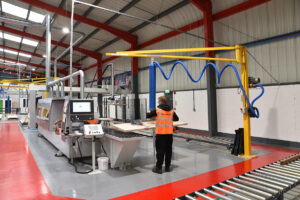
The reality is closer to true craftsmanship: tested materials, precise installation and maintenance.
The gap between the two is exactly what our exhibition stands kept running into. We found that presentations and product sheets just weren’t landing and getting the message across about what LFS can do. We needed something people couldn’t walk past.
An Unlikely Starting Point
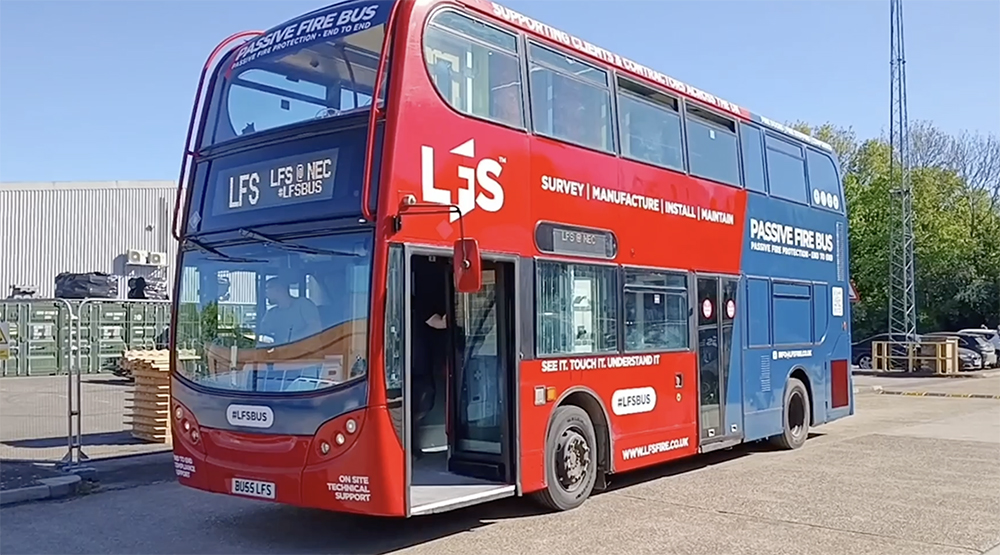
The idea came from somewhere completely unrelated to fire safety: a children’s play bus which featured a transformed interior for soft play. We realised that the same could work for passive fire too – a moving, engaging showroom and education centre.
So we found our own double decker in the shape of a former London bus that once ran Route 84 between St Albans and New Barnet. Once acquired, we set about turning it into something nobody in our industry had tried before.
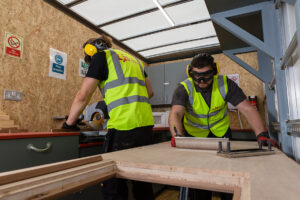
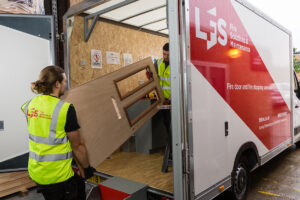
Stripped Out and Rebuilt By Our Own Team
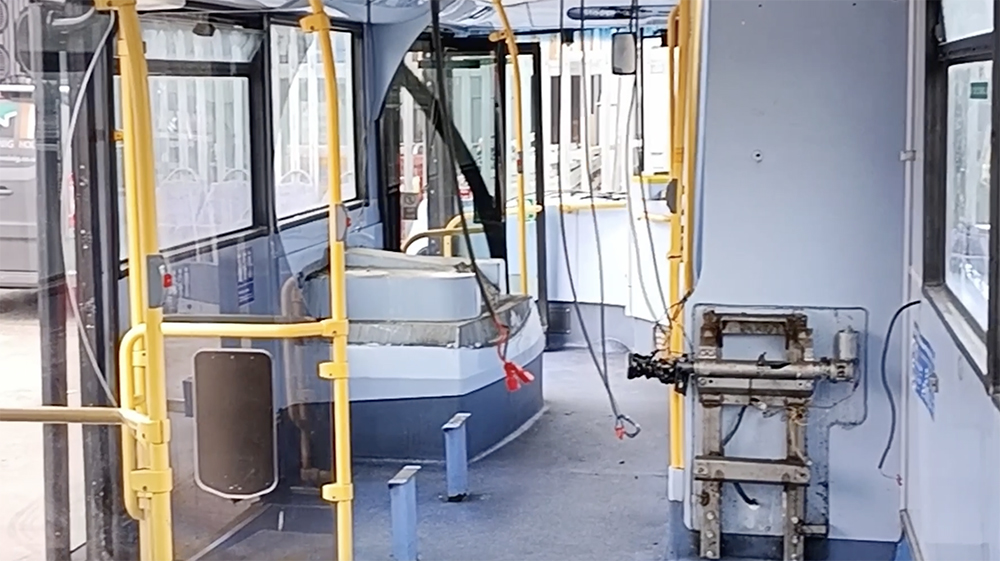
With a team of skilled workers on site, we decided against hiring a design agency or exhibition contractor. The bus was gutted and re-modelled by the same people who manufacture our fire doors, survey buildings and install passive fire systems day to day, because we wanted it to reflect real installation work, from the very people who will deliver for our clients.
The two decks now do different jobs. Upstairs is about fire doors and compartmentation, with interactive “spot the fault” displays that challenge people to find what’s wrong before we tell them, while downstairs is hands-on fire stopping – the barriers, seals and systems people usually only ever see photographed in a report, now in front of them to examine.
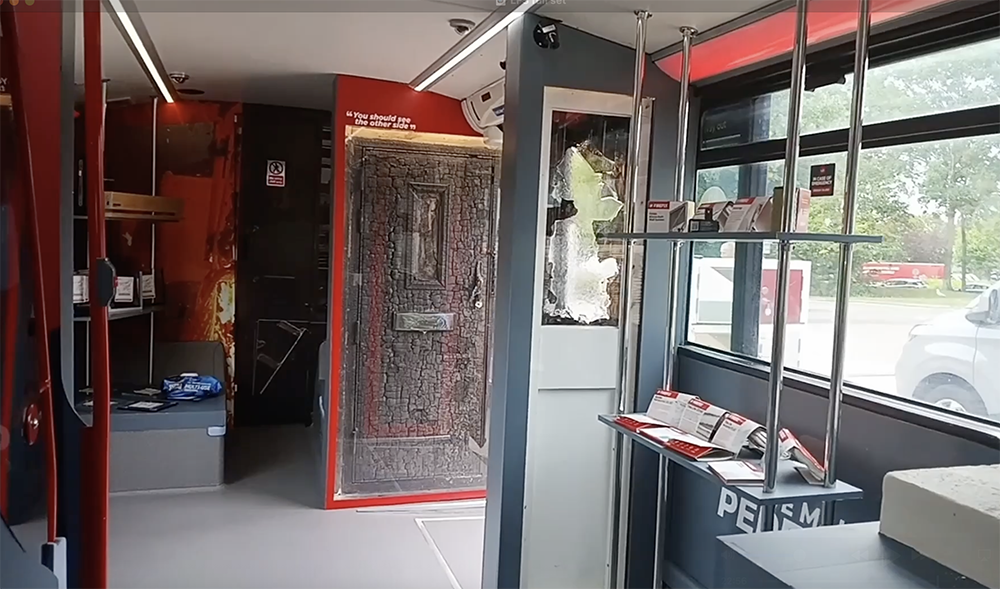
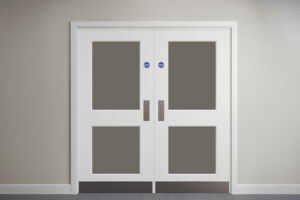
The main attraction within the LFS Passive Fire Bus has to be a fire door that’s actually been through a real fire test. It’s a direct, real-world answer to why manufacturing standards, correct installation and ongoing maintenance all matter. You’re looking at proof rather than a claim or a photograph.
From Idea To Road
Turning an old bus into a working exhibition space took the best part of two years, and getting there wasn’t straightforward. The huge commitment to deliver our vision meant the bus left for its first outing at the Fire Safety Event at Birmingham NEC with the electrician still onboard.
It was worth the many hours of tireless work. The bus became one of the most talked-about things at the entire show, and while some people came on board out of curiosity, most stayed because once inside, they got to understand firsthand exactly why we’d built it.
What It’s Really For
Though the bus turns heads, what’s more important is the conversations it generates, which we think the industry should be having more often. Passive fire protection is a craft with real consequences, not a compliance formality and if demonstrations like this make those conversations easier to start, it’s done its job.
A bus that used to carry commuters across London now carries passive fire protection knowledge around the country. As second careers go, we think it’s a good one.
Get in touch with us to find out where the bus is headed next.